- Cloud Email
How to Set Up Email Signatures Company-Wide in Microsoft 365
11 Mar, 2026
£1569.98 inc. VAT
AI-generated summary
If you’re paying **£1308 ex-VAT** for the **Ryzen ThreadRipper 9960X**, you’d better have a workload that actually benefits from a many‑core, workstation-class CPU—not just “it’ll be nice to have more cores”. This is the kind of chip that makes sense for teams doing things like heavy 3D rendering, professional video workflows, large code builds, big virtualisation/containers, or multi-user environments where you consistently hit sustained CPU loads. In those scenarios, the value is less about raw speed and more about *getting through work faster per workstation*—and ThreadRipper tends to shine when you can keep all that compute busy.
Where it’s not great is if you’re buying it as a general-purpose “future proof” CPU or mostly running light-to-moderate workloads (office apps, spreadsheets, typical database use without big parallelism, single-thread-dominant apps). For that, you can often get a much better cost/performance outcome by stepping down to a less expensive workstation/server option and spending the saved budget on faster storage, more memory, or a better GPU. Also, keep in mind that ThreadRipper is very much a *platform decision*—the total value depends on the motherboard/VRM quality and the rest of your system behaving well under long, sustained loads. If you tell me the workloads and what the rest of the build looks like, I can give you a straight “yes, buy” or “no, you’re overpaying” verdict.

Lenovo
Intel Xeon Gold 6426Y - 2.5 GHz - 16-core - 32 threads - 37.5 MB cache - for ThinkSystem ST650 V3 7D7A
Lenovo
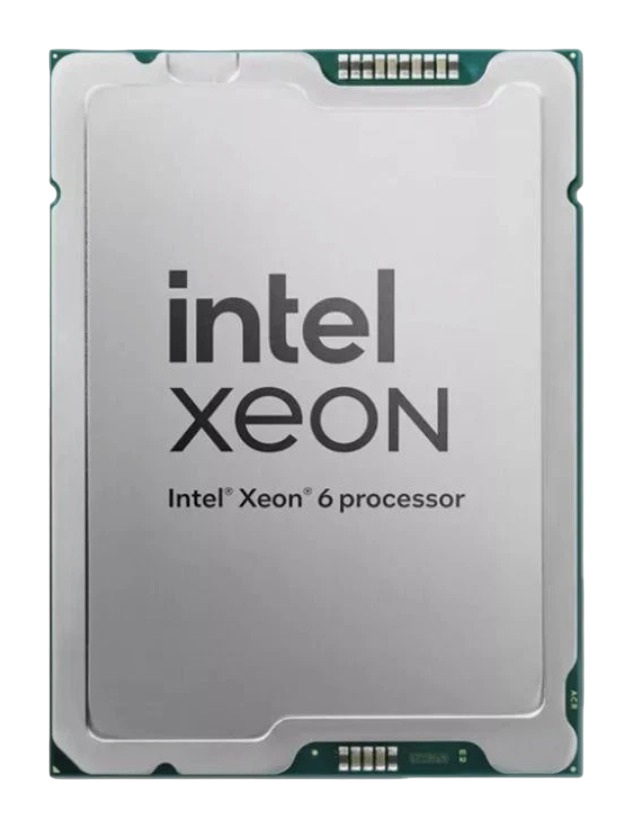
Intel Xeon 6505P - 2.2 GHz - 12-core - 24 threads - 48 MB cache
Lenovo
Intel Xeon 6505P - 2.2 GHz - 12-core - 24 threads - 48 MB cache

Lenovo
Intel Xeon Silver 4314 - 2.4 GHz - 16-core - 32 threads - 24 MB cache - for ThinkSystem ST650 V2 7Z74, 7Z75