- Network Admin
How to Handle Network Outages: A Response Plan
13 Jan, 2026
£238.99 inc. VAT
AI-generated summary
The Ryzen 5 8600G for ~£200 ex-VAT is one of those “makes sense until you price up the alternatives” parts. If you’re building small office PCs, lightweight dev boxes, or general business desktops where you don’t want a separate graphics card, the built-in graphics are the difference-maker for value and simplicity. For typical day-to-day workloads (Microsoft 365, web apps, file servers as a client, basic CAD/engineering viewers), it’s a very solid fit, and the AM5 platform gives you a sensible upgrade path later without having to redo the whole system.
That said, I wouldn’t buy it if the machine will run heavier GPU-dependent work—video rendering, 3D work, AI training, or any environment where you know you’ll be dropping in a dedicated graphics card. In those cases, you’ll usually get better overall throughput and longevity by spending the same money on a CPU without the “integrated graphics tax,” or by reallocating budget toward the GPU rather than the processor. Also, if you’re doing compute-heavy tasks that hammer all cores continuously, it’s fine but not a “premium performance” play—expect it to feel sensible, not punchy. Bottom line: great for cost-conscious, everyday business PCs and small deployments; avoid it if you’re clearly headed toward a powerful discrete GPU and want to squeeze maximum performance per pound.

Lenovo
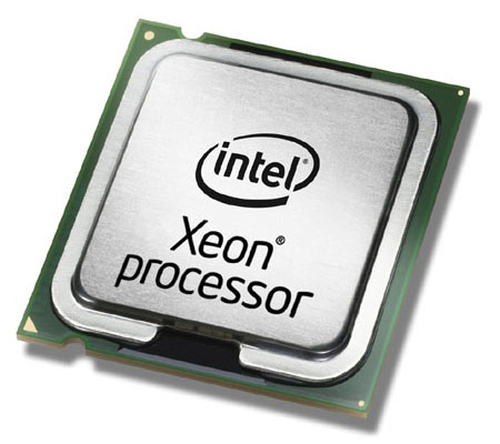
Intel Xeon Silver 4210R - 2.4 GHz - 10-core - 20 threads - 13.75 MB cache - for ThinkSystem SR530 7X07, 7X08, SR570 7Y02, 7Y03, 7Y04, SR630 7X01, 7X02
Lenovo
Intel Xeon Silver 4215 - 2.5 GHz - 8-core - 16 threads - 11 MB cache - for ThinkSystem SR530, SR570, SR630

Lenovo
Intel Xeon Gold 6126 - 2.6 GHz - 12-core - 19.25 MB cache - for ThinkSystem SN550
Lenovo
Intel Xeon Gold 5418Y - 2 GHz - 24-core - 48 threads - 45 MB cache - for ThinkSystem SR630 V3